cost guides
Quarter Sleeve Tattoo Cost: What You Pay for a Half-Half
Quarter sleeve tattoo cost lands between $400 and $1,800 for most pieces, with hourly rates of $150 to $300 and 3 to 8 hours of chair time depending on density and style.
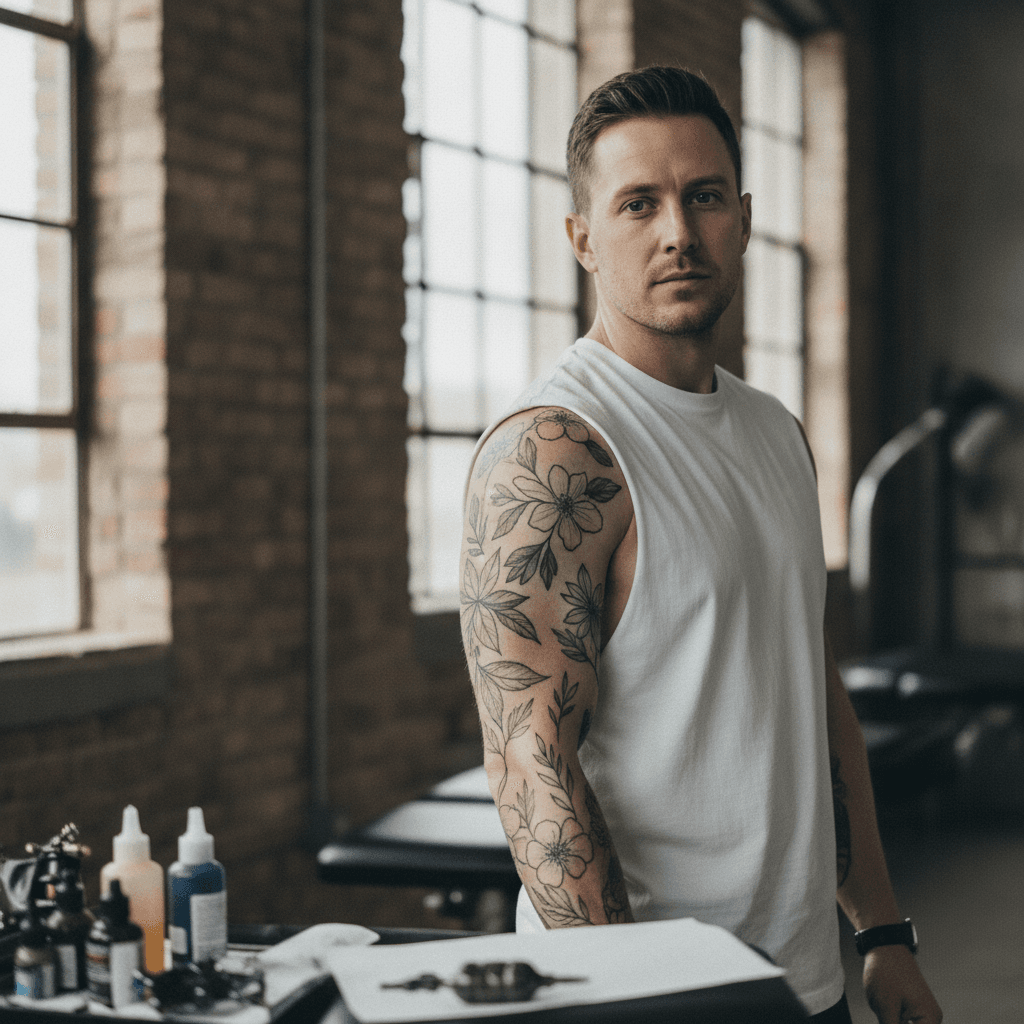
A quarter sleeve runs from the top of the shoulder down to roughly mid-bicep, covering about a quarter of the full arm length. It is the most common first step into sleeve territory because it reads as a cohesive piece but still finishes in one or two sessions at normal pricing. Expect to pay between $400 and $1,800 depending on style, density, and who holds the machine.
What a quarter sleeve actually covers
The anatomical zone is the deltoid cap and the upper third of the bicep and tricep. Most quarter sleeves wrap the arm fully, which means the artist has to design in the round and account for how the piece reads from the front, the side, and the back. A design that only sits on the outer deltoid is technically a shoulder piece, not a quarter sleeve, and should be priced as such.
Surface area matters because tattoo pricing scales with time and time scales with square inches of skin. A full wrap quarter sleeve typically covers 45 to 70 square inches. That is roughly double a standard shoulder cap and about half of what you would see in a half sleeve. For context on the next tier up, our half sleeve tattoo cost guide walks through the math for shoulder-to-elbow coverage.
Density changes everything. A line-heavy design with light shading can finish in three to four hours. A packed black-and-grey realism piece with smooth gradients and solid blacks can push eight hours or more. The same square inches, two very different invoices.
Hourly rates and total price ranges
Most reputable studios charge between $150 and $300 per hour for custom work. Established artists with three to five years of waiting lists sit at $250 to $400 per hour. Guest artists and tattooers with large social followings can hit $500 per hour or price flat at $1,500 to $3,000 for a quarter sleeve regardless of chair time.
Here is what the typical totals look like once you stack hours against rate:
- Simple linework or small motif cluster, 3 to 4 hours at $175 per hour: $525 to $700
- Mid-density black-and-grey botanical, 5 to 6 hours at $200 per hour: $1,000 to $1,200
- Dense neo-traditional with color packing, 6 to 8 hours at $225 per hour: $1,350 to $1,800
- High-tier realism or Japanese with full background, 8 to 10 hours at $275 per hour: $2,200 to $2,750
Flat rate quotes often come in slightly higher than hourly math would predict because the artist builds in a buffer for revisions and slower sections. If you are quoted flat, ask what happens if the piece runs long or short. Good studios absorb the difference either way.
How style drives the number
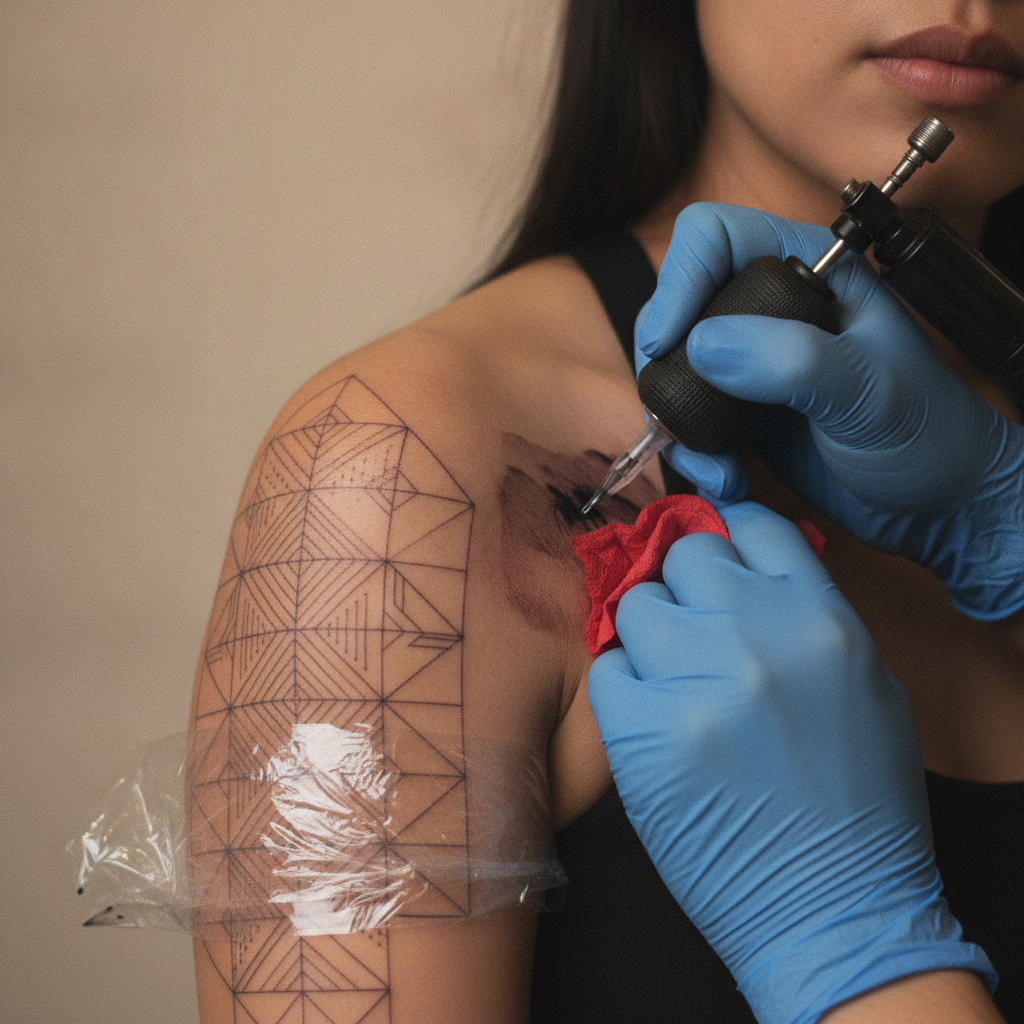
Fine line and single-needle quarter sleeves sit at the low end because the needle moves faster and the artist is not packing solid color. Expect $400 to $900 for a clean fine-line botanical or geometric wrap. Longevity is a tradeoff. Thin lines on the upper arm hold up reasonably well because the skin there sees less sun than the forearm, but you should still plan for a touch-up at the five to seven year mark.
Black-and-grey realism is the middle of the market. Smooth gradients take time and skin wipes slow the session down. Budget $900 to $1,600 for a well-executed black-and-grey quarter sleeve covering shoulder and upper bicep. Our black and grey tattoo cost guide breaks down the per-hour difference against color work.
Japanese irezumi and neo-traditional cost more because both styles rely on dense color packing and bold outlines that have to be laid down carefully. A quarter sleeve in traditional Japanese with wave filler and one main subject will typically run $1,500 to $2,500. Color packing adds hours in a way clients consistently underestimate.
Deposits, consultations, and tipping
Expect a deposit of $100 to $300 to secure your appointment. This is deducted from the final cost of the tattoo, not added on top. Lose the deposit if you no-call-no-show or reschedule inside the studio's cancellation window, which is usually 48 to 72 hours.
Consultations are often free for custom quarter sleeve work because the artist wants to see the arm and talk through flow. Some high-demand artists charge $50 to $100 for consultations, which is also deducted from the tattoo total. If you want to understand the deposit mechanics across studios, our tattoo deposit guide covers refund policies and what to expect.
Tipping is standard at 15 to 25 percent of the total. On a $1,200 quarter sleeve that is $180 to $300 in cash on top of the invoice. Build this into your budget before you book. For more on the etiquette, see our tipping guide.
Touch-ups and multi-session planning
Most quarter sleeves finish in one or two sessions. A single-session quarter sleeve means a 4 to 6 hour sitting, which is physically demanding on the upper arm because the deltoid is a nervy area and most people start fading after hour three. Splitting into two 3-hour sessions gives better color saturation and sharper lines because you are not fighting fatigue.
Touch-ups within six months are typically free or discounted at reputable studios. After that you pay the shop minimum, which runs $80 to $150. Plan for one touch-up at the one-year mark for color pieces. Black ink holds better and often does not need touching up for three to five years.
Frequently asked
How long does a quarter sleeve take? Most quarter sleeves finish in 4 to 8 hours of total chair time, split across one or two sessions. Dense color or realism pieces can stretch to 10 hours or more. Your artist should give you a session plan at the consultation.
Is a quarter sleeve cheaper than a half sleeve? Yes, significantly. A quarter sleeve covers about half the surface area of a half sleeve, so you pay roughly half the time at the same hourly rate. A $1,200 quarter sleeve becomes a $2,400 half sleeve at the same density and rate.
Can I extend a quarter sleeve into a full sleeve later? You can, and many clients do. Tell your artist at the consultation if you are open to extending. They will plan the composition so it flows into additional sections without a hard border or awkward break.
What hurts more, the shoulder or the bicep? The inner bicep is the most painful part of a quarter sleeve for most people because the skin is thin and the nerves run close to the surface. The outer deltoid is one of the easier areas to sit through. Expect the final 30 minutes on inner skin to be the hardest.
Do I pay for the stencil and design time? Design time is included in your tattoo cost at most custom shops, though some artists charge a separate design fee of $100 to $300 for complex quarter sleeve pieces. This is almost always disclosed at the deposit stage. Ask upfront if you are not sure.
What should I bring to a 5-hour quarter sleeve session? Snacks with protein and simple carbs, water, headphones, a loose tank top so the artist can access the full shoulder, and cash for the tip. Eat a full meal 90 minutes before you sit down. Low blood sugar is the fastest way to turn a long session into a bad one.