cost guides
Arm Band Tattoo Cost: Pricing, Styles, and What to Expect
Arm band tattoo cost ranges from $150 for a thin solid line to $1,200 for a wide geometric band. Here is what drives the price and how to budget.
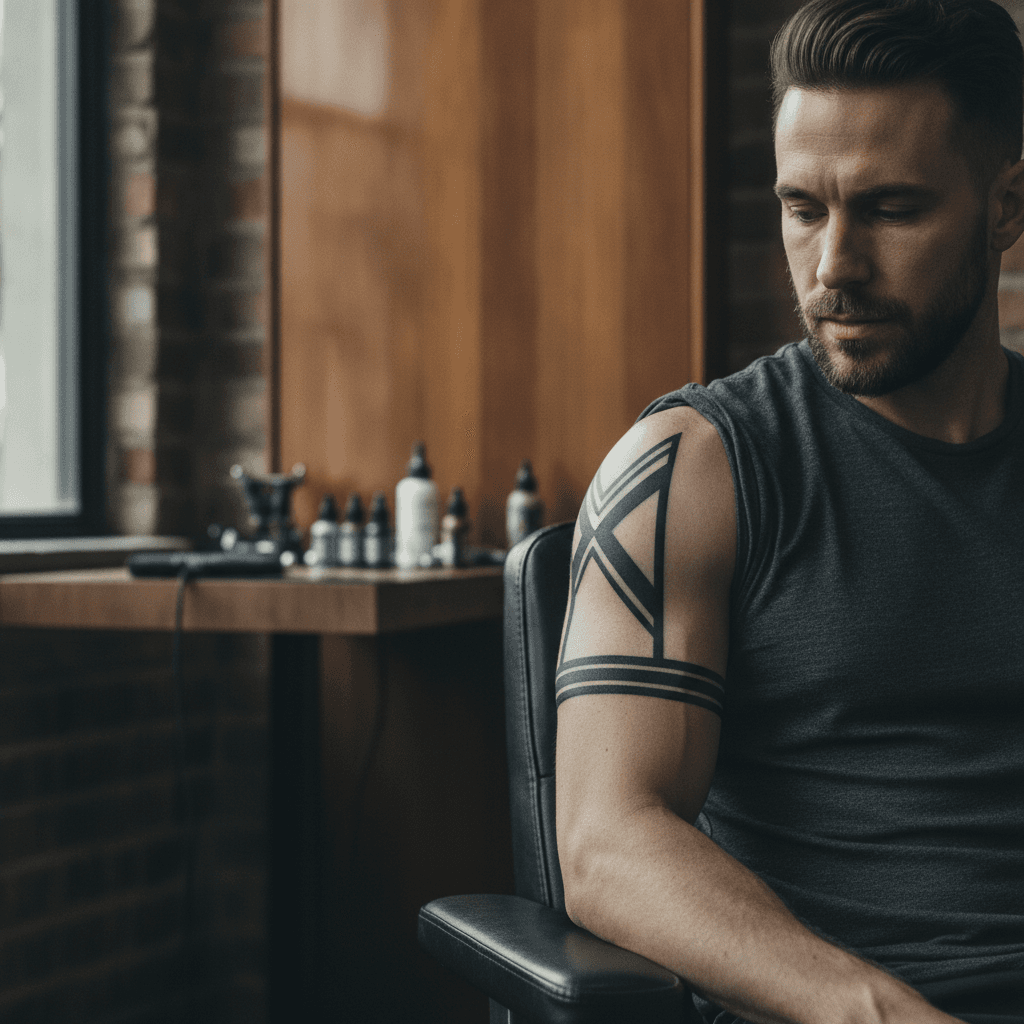
Arm band tattoos sit in an awkward spot on most price charts. They are small in area but demand a steady hand, perfect symmetry, and clean wrap-around linework that forgives almost nothing. A beginner artist charging $100 flat will give you a different piece than a resident at a reputable studio charging $200 an hour, and the gap shows up fast the moment the ink settles. This guide breaks down what you should expect to pay for every common arm band style, where the money actually goes, and how to brief an artist so the quote matches what lands on your skin.
Typical arm band tattoo price ranges in 2026
A plain solid black band roughly a quarter inch wide and five inches long usually prices out between $150 and $300 at a mid-tier US studio. That assumes a single session of under 90 minutes, no custom design work, and a shop charging between $120 and $180 per hour. Thicker solid bands pushing one inch or more jump to $300 to $600 because the fill time doubles and most artists will insist on a second pass to keep the black saturated. Geometric or dotwork bands with repeating patterns typically land at $450 to $900, since the artist is drawing a bespoke template and layering mandala-style motifs around the arm circumference. Tribal and Polynesian bands with heavy black fill and freehand curves run $600 to $1,200, often across two sessions.
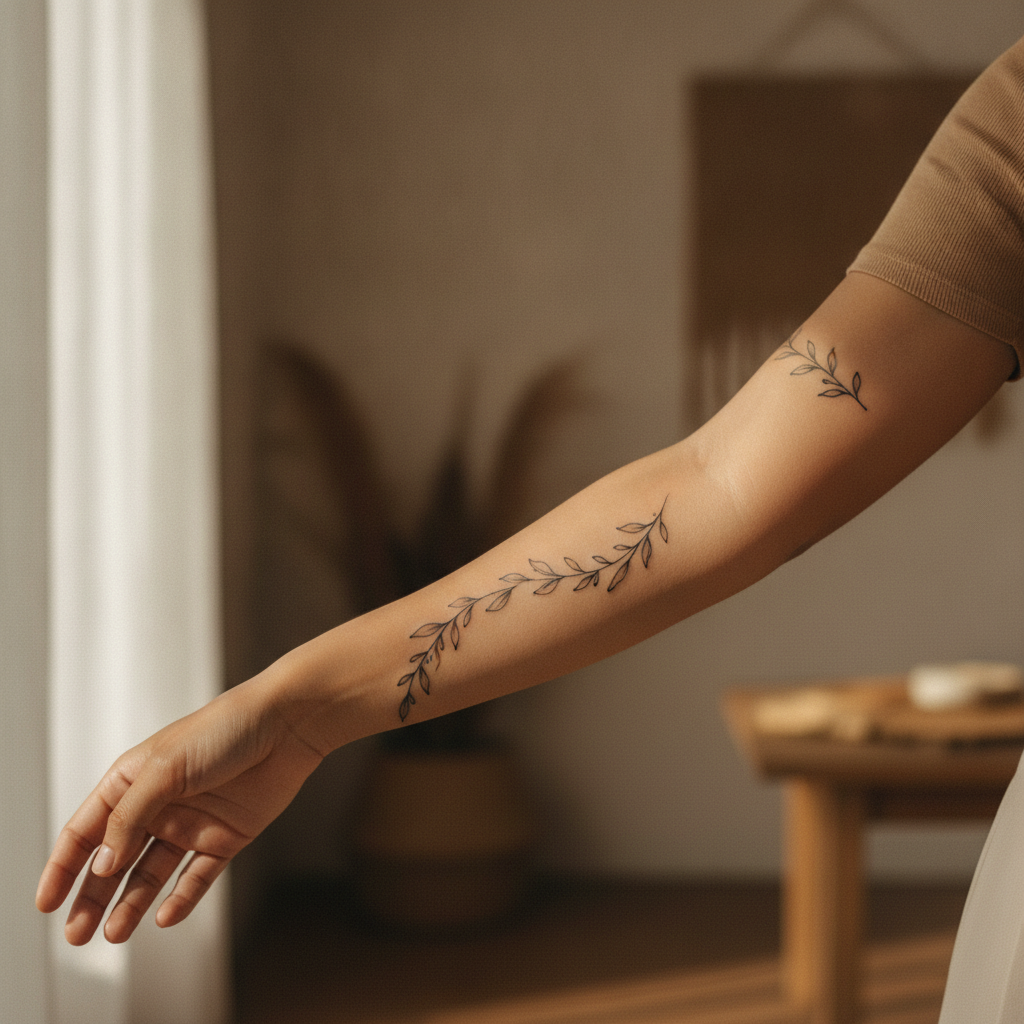
Fine-line botanical or script bands sit in a different pricing lane entirely. A delicate single-needle vine wrapping the forearm from a specialist is $400 to $800 for a 60 to 90 minute session, because fine-line work demands slower passes and more experienced hands. If you want color accents, a watercolor arm band with soft bleeds and petal shapes will push $700 to $1,400, and plan on a touch-up session four to eight weeks later as part of the quote.
- Thin solid band (quarter inch): $150 to $300
- Thick solid band (one inch or more): $300 to $600
- Geometric or dotwork band: $450 to $900
- Tribal or Polynesian band: $600 to $1,200
- Fine-line botanical band: $400 to $800
- Watercolor band with color accents: $700 to $1,400
What actually drives arm band pricing
Design complexity is the biggest lever. A solid black band is one continuous saturated line, which any artist with a decent machine can execute quickly. A geometric band stacks ten or twelve pattern repeats around the arm, each of which must align with the one before it, and that stencil and freehand correction time compounds. Expect to pay an extra $100 to $300 for anything with repeating patterns compared to a solid version of the same thickness.
Circumference matters more than people expect. A band wrapping an average male bicep covers around 13 to 15 inches of skin, while the same band on a forearm covers 9 to 11 inches. That difference adds 20 to 40 minutes of needle time, which translates to one more hourly block on your invoice. Bands placed over the elbow or across a joint also carry a surcharge of 10 to 25 percent at some studios, since the artist stretches the skin more and the piece requires more careful planning. Our elbow tattoo cost and bicep tattoo cost guides cover the specifics for each placement.
Hourly rate vs flat rate: which to ask for
Most arm bands under three hours of work are quoted flat. The artist estimates the time, adds a buffer, and gives you one number. Flat rate protects you from an artist running slow, but it builds in a safety margin of 15 to 25 percent that you are effectively paying upfront. For a straightforward one hour band this margin is small money, maybe $30 to $50, and worth the peace of mind.
Longer or more detailed bands quote hourly. Hourly runs $120 to $250 per hour in the US, $80 to $150 in most European cities, and $40 to $100 in Southeast Asia at reputable studios. If the design will take four or more hours, insist on an hourly rate and ask for an estimated range of hours, because a flat quote on a six hour piece builds in enough buffer to cost you an extra session worth of money. For a deeper walkthrough of this trade-off, our hourly vs flat-rate pricing breakdown goes further.
Common pitfalls that inflate the final bill
Changing the design on the day costs money. If you book a thin solid band and decide during stencil placement that you want dotwork texture added, most artists will quote the change at their hourly rate with a one hour minimum. The stencil has to be redrawn, the time estimate recalculated, and the booked window may no longer be enough.
- Showing up without hydration or food can slow the session, which costs you on hourly bookings
- Asking the artist to match a reference piece from another artist without crediting it can mean a redraw fee
- Requesting multiple proof rounds beyond two or three usually adds a design fee of $50 to $150
- Rescheduling inside 48 hours of the appointment typically forfeits a non refundable deposit of $100 to $300
Touch-up policy is the one most people overlook. Reputable studios include one free touch-up within six months on solid work. Fine-line and color bands often charge full hourly rate for touch-ups, since the second pass is itself skilled work. Ask about this before you book, not after you heal. Our guides on tattoo touch-up cost and the tattoo deposit guide cover the fine print worth checking.
Choosing the right artist for an arm band
Not every tattooer is strong at bands. The style demands clean straight lines held across the curve of the arm, which is a specific technical skill that comes from reps, not raw talent. When you browse portfolios, look for healed photos of bands taken at least three months after the session, since fresh ink always looks sharper than it will after a year. Pay attention to the top and bottom edges of the band. Wobbles there are the easiest tell of an inexperienced hand.
Geometric and tribal bands need a specialist. If an artist has one tribal band in their portfolio and twenty fine-line roses, they are not your person for a Polynesian wrap. Expect to pay a 20 to 50 percent premium for a specialist, and understand that premium is almost always worth it on a piece that circles your arm forever. Resident artists at well-regarded shops usually charge $150 to $200 per hour and are often the sweet spot for most band work. Celebrity or guest artists pushing $400 to $600 per hour exist, and their skill is real, but for most clients a strong resident is the better value.
A clean solid black band from a resident artist with 5 years of experience will outlast a wobbly geometric band from a cheap shop by a decade in visual quality.
Budget expectations by region
Prices for the same arm band vary wildly by city. A thin solid black band on the bicep runs $180 to $300 in New York, Los Angeles, or London. The same piece runs $120 to $220 in Berlin, Lisbon, or Mexico City. In Bangkok, Chiang Mai, or Bali, expect $60 to $150 at a reputable studio with Western sanitation standards, though you should still vet the shop in person. Our prices and getting a tattoo in Bali piece covers travel-specific considerations if you are planning a trip.
Travel changes the math when you combine it with a holiday, but it is rarely worth flying for a tattoo alone. Add flights, hotel nights for the healing window, and the risk of a piece you cannot easily get touched up, and the savings on an $800 band disappear fast. Travel pricing makes real sense for larger pieces where the per-hour gap compounds, which is why Bali and Bangkok tattoo tourism skews toward sleeves and back pieces, not bands.
Frequently asked
How long does an arm band tattoo take? A thin solid band usually takes 60 to 90 minutes. A thick solid band runs two to three hours. Geometric, tribal, or dotwork bands often need three to five hours total, sometimes split across two sessions if the client cannot sit through the full wrap in one go.
Is an arm band tattoo more painful than a regular tattoo? The inner bicep and the back of the arm near the triceps are among the more painful placements because the skin is thin and close to nerves. The outer bicep and the top of the forearm are much more tolerable. A solid band hurts most in short, intense bursts during the fill passes, while a dotwork band hurts in a lower-grade sustained way across the whole session.
Can I get a solid black band touched up to geometric later? Yes, but it is harder than starting with geometric. Overlaying patterns on top of solid black requires either white ink highlights, which fade faster, or breaking up the solid fill with negative space, which is tricky to execute cleanly. If you think you might want pattern work eventually, start with a geometric design rather than planning to add it later.
Why do some artists charge double for the same arm band? Experience, portfolio strength, waitlist, and shop reputation. An artist with a six month waitlist and a specialty in bands can charge what the market pays, and the quality gap between a $150 and a $400 band usually shows up in line consistency, saturation, and healed-piece crispness. If you are serious about the piece, pay for the artist who has done it a hundred times.
Do arm bands fade faster than other tattoos? Solid black bands hold up extremely well because the saturation is uniform and the lines are thick enough to stay crisp as skin ages. Fine-line and watercolor bands fade noticeably within three to five years, especially on sun-exposed arms. Daily sunscreen on the piece is the single highest-leverage thing you can do to keep any arm band looking sharp.
Should I budget for a touch-up? On solid or geometric work, assume one free touch-up at six months and plan to pay for a maintenance pass every three to five years at roughly half the original hourly rate. On fine-line or color, plan for a paid touch-up at eight to twelve weeks after healing as part of the project, and a maintenance pass every two to three years.