cost guides
Geometric Tattoo Cost: 2026 Pricing Guide by Size and Style
Real 2026 pricing for geometric tattoos by size, artist tier, and placement, plus why the style costs more per inch than it looks like it should.

Geometric tattoos sit in a tricky spot on the price sheet. The linework looks minimal, so people expect to pay less, but the precision required to keep every line parallel and every angle clean pushes the artist rate up fast. If you are budgeting for a mandala on your forearm or a sacred geometry piece across your back, this guide breaks down what you will actually spend and where the money goes.
What a geometric tattoo costs by size
For a small geometric piece, think a hexagon cluster on the wrist or a minimal dot-and-line pattern behind the ear, expect $120 to $250 flat rate at most reputable shops. Anything under $80 is a red flag unless it is a walk-in special from an apprentice. Studios have a minimum charge for a reason: setting up needles, ink, and stencil takes the same time whether the piece is one square inch or three.
Medium geometric work, roughly palm-sized to half-forearm, runs $300 to $700. This is the sweet spot where hourly pricing kicks in and you start seeing real variation between artists. A specialist who trained under someone like Dillon Forte or Chaim Machlev will charge $200 to $350 per hour and finish a clean medium piece in two to three sessions of two hours each.
Large geometric work, a full sleeve, back panel, or chest piece, sits in the $1,800 to $6,500 range. Sacred geometry sleeves with dotwork shading and mandala centerpieces almost always land at the top of that range because they require multiple sessions and near-perfect line consistency across the whole composition. Budget for four to eight sessions spread over three to six months.
Why geometric tattoos cost more per square inch than they look like they should
The style punishes any wobble. A traditional bold-line piece can hide a slightly shaky outline under color fill or a thick border. A geometric piece cannot. Every line is exposed, and the eye immediately catches any deviation from a perfect angle or parallel path. Artists who specialize in geometric work spend years training their hands to hold a machine steady enough for repeat parallel lines at fine gauges, and they price accordingly.
Stencil work also takes longer. A skilled geometric artist will often spend as much time laying out the stencil as they do tattooing. For a complex mandala or a piece built around sacred geometry ratios, expect an hour or more of stencil placement before the machine ever touches skin. Most shops fold this into the hourly rate, but some charge a separate design fee of $50 to $200 depending on complexity.
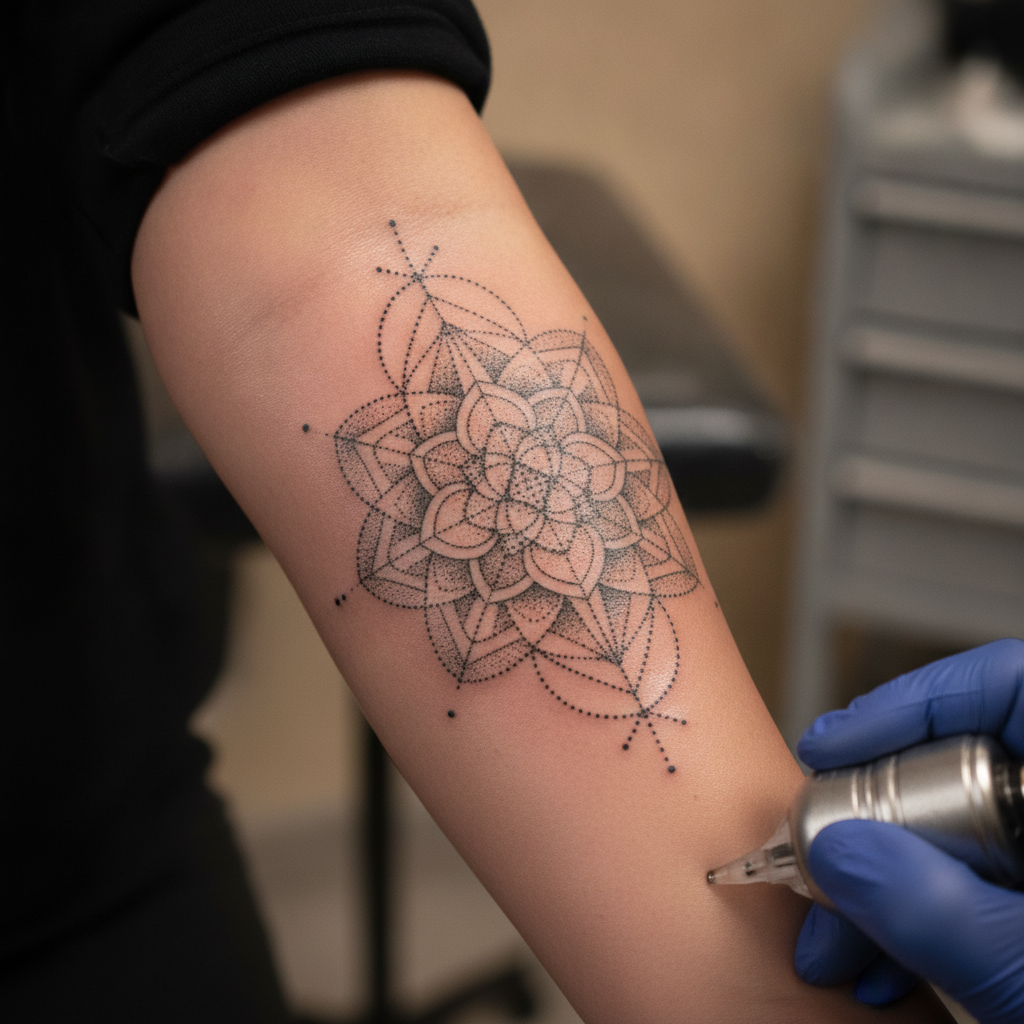
Needle choice matters too. Fine-line geometric work uses 3RL or single-needle configurations that move slower through skin than the mag needles used for shading and traditional work. Slower speed means more chair time, and more chair time means a higher final bill. A piece that a traditional artist could finish in three hours might take a geometric specialist five.
Placement affects geometric pricing more than most styles
Curved body parts wreck geometric compositions. Ribs, the underside of the bicep, the top of the foot, anywhere the skin moves or stretches unevenly, all add difficulty and cost. Artists will often quote 15 to 25 percent more for geometric work on high-motion areas because they need to plan for skin distortion and rework any lines that shift during healing.
Flat, stable surfaces price at the base rate:
- Outer forearm: base rate, ideal for first-timers
- Upper back and shoulder blades: base rate, room for large compositions
- Outer thigh: base rate, room for large mandalas or sleeve extensions
- Calf: base rate, good for standalone geometric pieces
Premium surface pricing kicks in for:
- Ribcage: 20 to 30 percent above base
- Hand and finger: 25 to 40 percent above base, plus higher touch-up likelihood
- Neck and throat: 20 to 35 percent above base
- Foot and ankle: 15 to 25 percent above base
For placement pricing on other styles, our forearm tattoo cost guide covers standard rates in more depth, and the ribcage tattoo cost breakdown shows how high-motion pricing works across style categories.
Hourly vs flat rate for geometric work
Most geometric specialists work hourly once a piece crosses about four inches. Flat rates only make sense for small, self-contained designs where the artist has done the same piece dozens of times, like a Fibonacci spiral or a simple sacred geometry symbol. For anything custom, hourly protects both sides: the artist gets paid for stencil time and line correction, and you do not overpay if the piece takes less time than expected.
Hourly rates in 2026 for established geometric artists:
- Apprentice or new artist with strong portfolio: $80 to $150 per hour
- Mid-level shop artist with 3 to 7 years experience: $150 to $250 per hour
- Senior specialist with a waiting list: $250 to $400 per hour
- Name artist with international bookings: $400 to $800 per hour, plus travel fees for guest spots
Deposits for geometric work usually run $150 to $400 depending on the artist. The deposit comes off the final bill and covers the design time, which for geometric pieces is significant. Our tattoo deposit guide explains how deposits work across the industry, and the hourly vs flat rate pricing breakdown walks through when each model favors the client.
Touch-ups and long-term care add to the true cost
Geometric tattoos are notorious for needing touch-ups. Fine parallel lines can blur slightly during healing, and dotwork shading can lose density if the ink was not packed evenly. Budget an additional $100 to $300 for a touch-up session six to twelve months after the original piece. Most artists include one free touch-up if you followed aftercare properly, but if you skipped moisturizing or exposed the piece to sun, you will pay for the rework.
Long-term, geometric work fades in a specific pattern. The line ends often round off, and the tightest angles soften first. Plan on a maintenance touch-up every five to seven years for high-detail pieces if you want them to stay crisp. Colored geometric work fades faster than blackwork, and the color tattoo aftercare guide covers what accelerates that fade.
Frequently asked
Is a small geometric tattoo cheaper than a small traditional tattoo? Usually no. The minimum charge covers the setup, so a $150 minimum applies to a small geometric piece just like a small traditional one. If anything, geometric work leans higher because the artist may charge extra for stencil complexity. Expect $150 to $250 for anything under three inches.
Why do some geometric artists charge $400 an hour? The specialization pool is small. Fewer than a few hundred artists worldwide have the linework precision needed for large, tight geometric compositions, and demand for the style has grown steadily since 2015. Rates track scarcity. If you find a $150 per hour artist with a real geometric portfolio, book them before their rate climbs.
Can I negotiate the price of a geometric tattoo? Not really. Artists set rates based on their skill and demand, and reputable ones do not haggle. What you can do is ask about session packages: booking three sessions upfront sometimes gets you a small discount, especially with mid-level artists building their client base.
How much should I tip on a geometric tattoo? Standard tipping applies. Fifteen to twenty five percent of the total bill, given in cash at the end of the final session. For a $2,000 sleeve, that means $300 to $500 in tip. If the artist absorbed touch-ups or extra design time, tip on the higher end. The tattoo artist tipping guide covers regional norms.
Do dotwork geometric pieces cost more than line-only geometric pieces? Yes, usually 20 to 40 percent more. Dotwork shading requires thousands of individual needle passes, and the density has to be consistent across the whole piece. A line-only mandala might take three hours where the same piece with full dotwork shading takes five to six.
How long should I save before booking a large geometric piece? For a full sleeve, budget $4,000 to $6,500 total and save for six to nine months before your first session. Break the payment across sessions so you are not carrying the whole cost at once. Most artists accept partial payment at each sitting, with the deposit applied to the final session.