cost guides
Foot Tattoo Cost: What You'll Actually Pay in 2026
Foot tattoo cost runs $80 to $600 for most designs, with thin skin, bony placement, and slow healing all pushing the price up.

Foot tattoos look effortless in photos and cost more than they look. The skin on top of the foot is thin and stretched over bone, which means slower work for the artist, more discomfort for you, and a higher rate of fading that often needs a touch-up inside the first year. A small fine-line piece on the top of the foot starts around $80 to $150 at a shop minimum, and a detailed half-foot design with shading or color can climb past $600. The number that lands on your final invoice depends on size, complexity, artist tier, and whether the work spills onto the side or arch.
What a foot tattoo actually costs by size
Most shops charge a minimum of $80 to $150 for any piece, foot or otherwise. That floor covers setup, sterilization, and the artist's time even if the design is tiny. A single-word script across the top of the foot or a small symbol the size of a coin lands right at that minimum at most studios in the US, UK, and Australia. A palm-sized design with light linework and minimal shading typically runs $200 to $400, and that covers things like a small floral spray, a constellation, or a single bird.
Move into a piece that covers most of the top of the foot from toes to ankle and the price jumps to $400 to $900 depending on detail. A full foot design that wraps onto the side or includes color shading often takes two sessions and runs $700 to $1,500 total. If you want anything crossing the ankle bone or extending up the shin, expect to pay for the extra session time even if the visual size looks similar to a flat piece.
For first-timers comparing locations, our ankle tattoo cost guide covers the closely related ankle bracelet and side-foot styles in detail, since many people end up combining the two.
Hourly rates and why foot work runs long
Most artists in major US cities charge $150 to $300 per hour. Award-winning specialists charge $300 to $500 per hour and book months out. Outside major metros, hourly rates often sit between $100 and $180. The foot adds time to nearly every design because the artist works at awkward angles, the skin moves with every flinch, and lines on bony areas need extra passes to take properly.
A design that would take two hours on a forearm often takes three on the foot. That hour of extra labor at $200 an hour adds $200 to the bill before tip. Artists who work the foot regularly know to budget the extra time upfront and quote a flat rate instead of running the clock, so always ask for the quote format before booking.
- Shop minimum: $80 to $150
- Small fine-line piece (under 3 inches): $150 to $300
- Medium piece across top of foot: $400 to $900
- Full foot or foot-plus-ankle wrap: $700 to $1,500
- Hourly rate (mid-tier artist): $150 to $300
What makes foot tattoos more expensive than they look
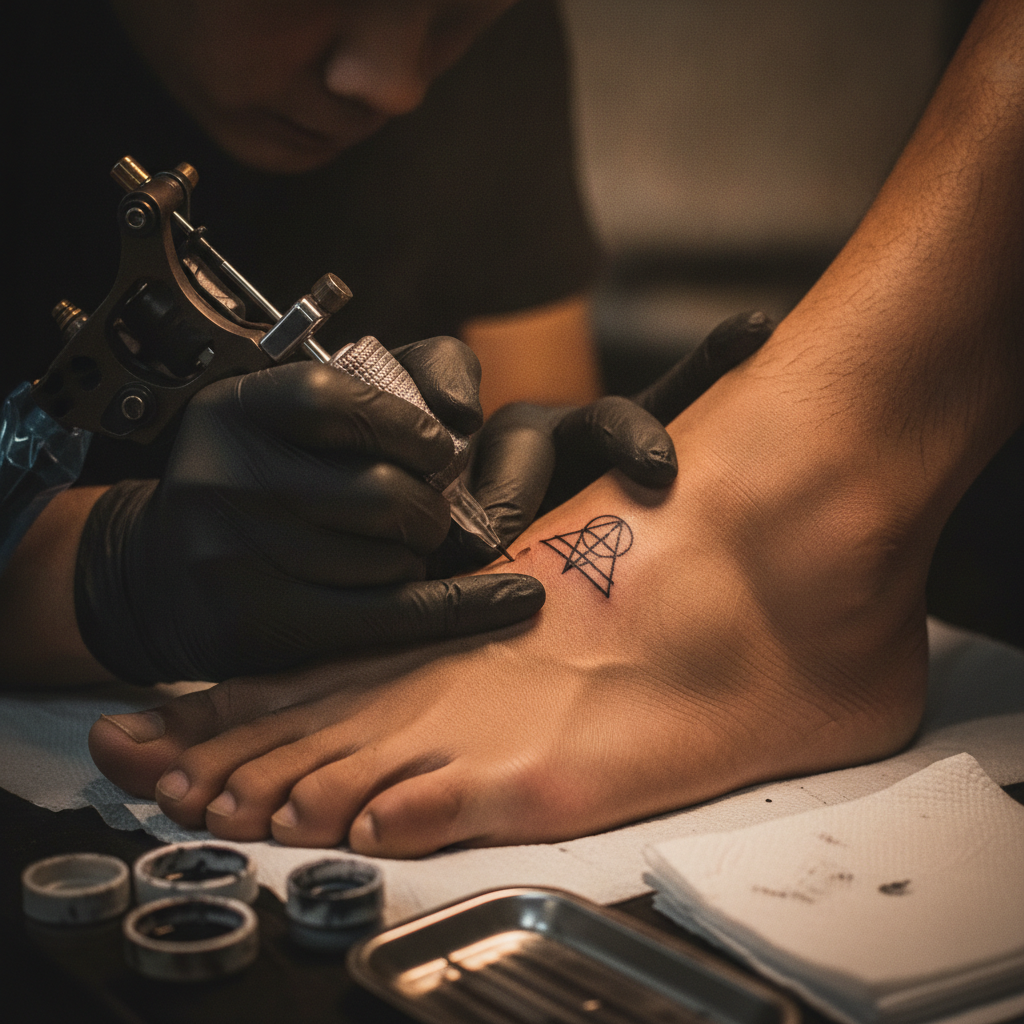
Three factors push foot pricing above what the visual size suggests. The skin on the top of the foot is thin with very little fat underneath, which means the artist must work slowly to avoid blowouts. Blowouts happen when ink spreads under the surface and creates blurry edges, and they are far more common on the foot than on meaty placements. A good artist slows the machine and goes lighter on pressure, which adds session time.
The second factor is healing. Feet are inside shoes most of the day, sweat is constant, and walking flexes the tattoo with every step. That combination delays full healing from the typical three to four weeks out to six to eight weeks, and the slower the heal the more touch-ups you tend to need. Most artists include one free touch-up inside six months. After that, expect to pay $80 to $200 for a refresh session, which our tattoo touch-up cost guide breaks down in detail.
The third factor is artist hesitation. Many artists will not tattoo the very tops of toes or the underside of the foot because the ink rarely holds. If you find an artist willing to do those areas, they usually charge a premium because they are signing up for extra touch-up labor down the line.
Style and design choices that change the bill
A fine-line piece costs less than packed black or color shading because it is faster to execute and uses less ink. A simple line drawing of a flower on the top of the foot might be a one-hour job at $200. The same flower with detailed dotwork shading and stippling can push three hours and $600. Watercolor and color work cost more for two reasons. The artist switches inks more often, and color on the foot tends to fade faster than black, so the artist often packs it heavier upfront which takes longer.
Geometric and ornamental designs are popular on the foot because the symmetry follows the natural shape of the bones and tendons. They also tend to age well because clean black linework holds up better than soft gradient work on this placement. For inspiration on style direction, our fine-line tattoos style guide covers what to expect long-term from thin black linework.
Hidden costs most people miss
The sticker price is not the full bill. Tip is standard at 15 to 25 percent of the total, and most artists expect closer to 20 for a foot piece since they put in extra effort working the awkward angle. On a $400 tattoo, that is $60 to $100 in cash.
Deposits run $50 to $200 and apply to the final cost, but if you cancel or no-show you forfeit them. Aftercare supplies add another $20 to $40 the first month, since most foot tattoos benefit from a healing balm and breathable cotton socks for the first two weeks. If you cannot take time off work and you stand all day, expect to take an extra day or two off compared to a forearm tattoo. Walking flexes the skin and slows healing meaningfully.
- Tip: 15 to 25 percent of the tattoo price
- Deposit: $50 to $200 (applies to total)
- Aftercare supplies: $20 to $40
- Possible touch-up at 6 to 12 months: $80 to $200
Frequently asked
Why does the foot cost more than a forearm of the same size? Thin skin over bone makes the work slower and harder. Artists often charge a flat rate that accounts for the extra time and the higher likelihood of needing a touch-up, so a foot piece routinely runs 20 to 40 percent more than the same design on the forearm. The bill reflects labor time, not just visual size.
Is the foot a bad placement for color tattoos? Color on the foot fades faster than color on most other placements because of friction from shoes and sun exposure on sandals. It is not a bad placement, but plan on a touch-up every two to three years to keep color saturated. If you want a piece you can forget about, black ink is the durable choice.
How long does a foot tattoo take to heal compared to other spots? Six to eight weeks for full healing versus three to four for most other placements. The skin closes in the usual two weeks, but the deeper layers take longer because constant flexing and shoe contact slow the process. Plan on loose shoes or sandals for at least the first ten days.
Do I need to take time off work? If you sit at a desk and can elevate the foot, one day is usually enough. If you stand or walk for a living, take two to three days off. Returning too early increases ink loss and the odds of needing a paid touch-up later.
How much should I budget for a small minimalist foot tattoo? Plan on $250 to $400 total in 2026. That covers a $150 to $250 tattoo at a mid-tier artist, a 20 percent tip, and basic aftercare supplies. If you want a specialist with a waitlist, double that figure and add a deposit on top.
Are deposits refundable if I change my mind? Almost never. Industry standard is non-refundable deposits because the artist has reserved time and likely turned down other bookings. Reschedules within a reasonable notice window (usually 48 to 72 hours) typically roll the deposit forward to the new appointment.